The moment you sign the closing papers on your first home, you inherit a heating and cooling system you’ve probably never had to think about before.
We’ve been servicing HVAC systems in the northern Chicago suburbs since 1918, and the questions we hear most often from first-time homeowners aren’t complicated ones: How does this thing actually work? What am I supposed to do with it every year? How do I know when something’s wrong?
This guide answers all of that with the Chicago climate in mind.
What Does Your HVAC Actually Do
Chicago’s all-time temperature records span from -27°F to 105°F. That’s a range of more than 130 degrees.
Your heating and cooling system is built to handle that full range every single year.
Your home’s heating and cooling system is made up of three components working together: a furnace that heats the air, an air conditioner that cools it, and a network of ducts that moves conditioned air to every room and returns stale air for treatment again.
The thermostat is the brain that tells the system when to start and stop.
In most Chicagoland homes, the heating side runs on natural gas.
Gas furnaces are the dominant choice across the Illinois region (nearly three-quarters of households heat with natural gas) because they handle extreme cold better than electric alternatives.
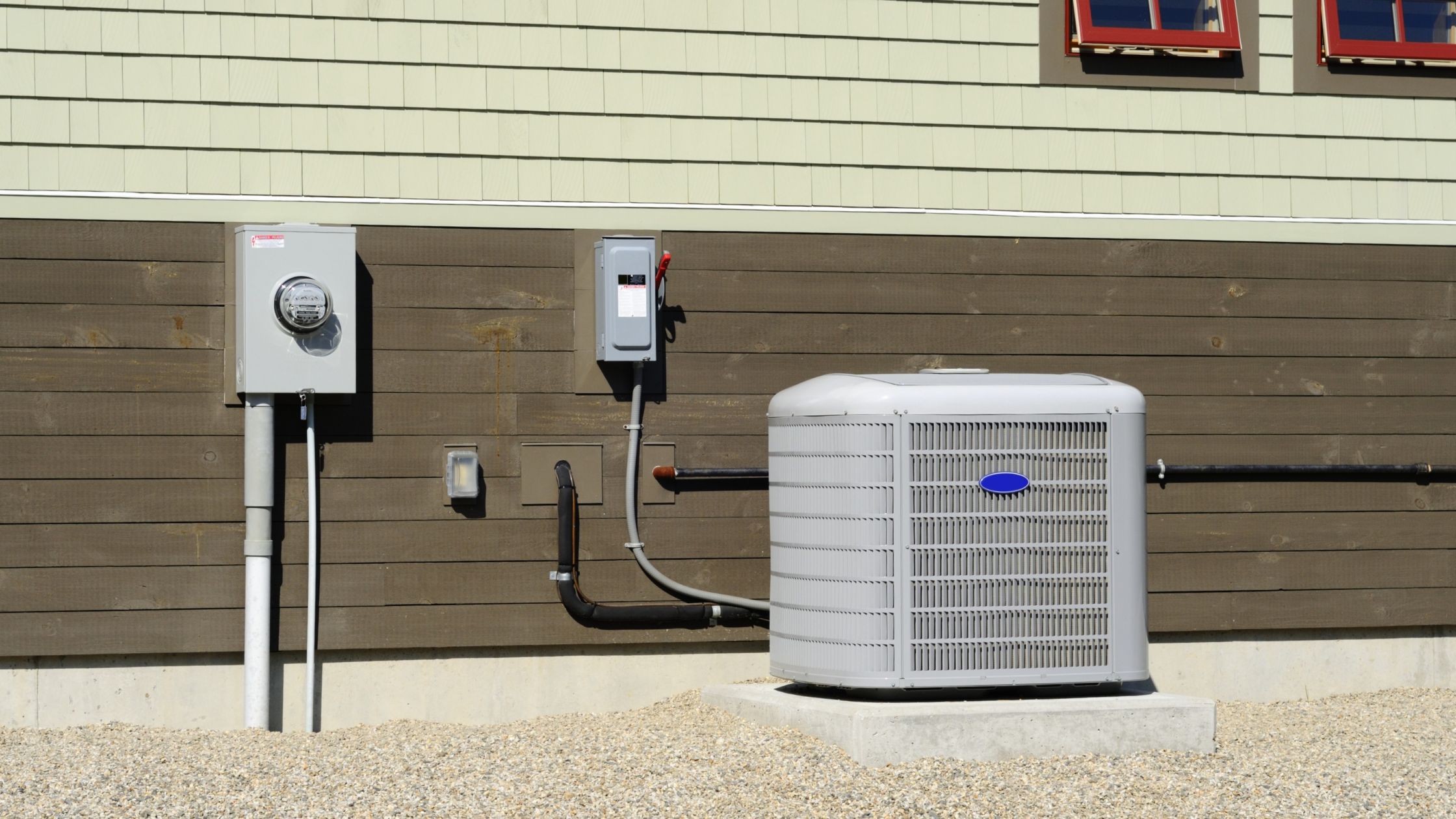
On the cooling side, most homes have a central air conditioner with an outdoor compressor unit and an indoor coil that works in tandem with the furnace’s blower to circulate cool air.
One of the first practical things to do in a new home: find out how old your HVAC equipment is.
The manufacture date is usually encoded in the serial number on a label attached to the unit. Most manufacturers encode the production date within the serial number. In some cases, you can use the manufacturer’s lookup tool or contact an HVAC contractor to determine the unit’s age.
Furnaces typically last 15-20 years with regular maintenance; central air conditioners run 10-15 years.
Knowing where your system falls on that timeline shapes every other decision this guide covers.
What Does Regular HVAC Maintenance Look Like
HVAC maintenance falls into two categories: simple tasks any homeowner can handle on a regular schedule, and professional inspections that catch what you can’t see.
What You Handle
The most important thing you can do, and the one that makes the biggest difference in how well your system runs, is to change the air filter regularly.
In Chicago, where systems run hard for months at a stretch, that means every 1 to 2 months during peak heating and cooling seasons, not every 3 months as the label on a cheap filter might suggest.
A clogged filter restricts airflow, forcing the system to work harder and potentially causing components to overheat or freeze.
You can also keep the outdoor condenser unit clear of debris.
There should be at least two feet of clearance around it.
Beyond that, pay attention. If something sounds different, smells odd, or the system takes longer than usual to reach the target temperature, note it.
What a Professional Handles
Twice a year, a qualified technician should inspect and tune up your system.
The fall appointment (ideally in October, before the heating season starts) covers your furnace: heat exchanger integrity, burner operation, blower performance, gas connections, and safety controls.
The spring appointment, typically in April, covers the air conditioner: refrigerant levels, coil condition, electrical connections, and the condensate drain.
If you moved into your home without documentation of past maintenance, treat that as a reason to schedule an inspection before winter, regardless of when your last tune-up should have been.
How Chicago’s Climate Affects Your HVAC
Chicago’s winters and summers stress your HVAC in unique ways.
During severe Chicago cold snaps, furnaces may run for much of the day and occasionally nearly continuously.
In our experience servicing furnaces across the northern suburbs, the cumulative wear from Chicago winters is real.
All that runtime means repeated thermal expansion and contraction inside the furnace, particularly in the heat exchanger, the metal component that separates combustion gases from the air your family breathes.
Over years of Chicago winters, those expansion and contraction cycles create micro-stress in the heat exchanger walls, which is one of the reasons annual furnace inspections matter more here than in warmer regions.
A cracked heat exchanger is a safety concern.
During the summer, here comes its own Chicago-specific problem: lake-effect humidity.
Your air conditioner removes moisture from the air.
In a dry climate, dehumidification is a minor side effect of cooling.
Chicago’s humid summers require air conditioners to remove more moisture, which can increase system workload and energy use.
That dual burden puts a sustained load on the compressor that dry-climate systems never experience.
It’s one reason we often see Chicago-area AC units reach the end of their useful life closer to the lower end of that 10-to-15-year window, especially without consistent annual maintenance.
What Warning Signs Should I Look Out For
Most expensive HVAC repairs don’t come without warning. Here are just a few things to look out for.
Sounds
A functioning furnace or air conditioner should be relatively quiet during normal operation.
Banging or clanking suggests a loose component. Screeching or squealing often indicates a failing blower motor or a worn belt. Persistent clicking during system startup can indicate an ignition problem.
None of these are normal sounds.
Smells
A faint burning smell at the start of heating season — the first time you fire up the furnace in October — is usually dust burning off and clears quickly.
A burning smell that lingers for more than a day warrants a call to a professional.
If you ever smell gas, leave the house and call your gas company and a technician from outside the building.
Performance
If some rooms in your home are consistently colder or warmer than others, or if the system runs continuously without reaching the temperature you’ve set, something is working against it.
It could be as simple as a dirty filter, a refrigerant issue, a duct problem, or a failing component.
If your energy bills spike noticeably without a change in your usage patterns, the system is working harder than it should to do the same amount of work.
Visible Signs
Ice forming on the outdoor AC unit during the summer is never normal. Moisture or pooling water around the indoor unit points to a clogged condensate drain.
Repair or Replace?
When a technician tells you your system needs a significant repair, there’s a natural impulse to ask whether you should just replace the whole thing instead.
Here’s how we think about that decision.
Furnaces have useful lives of 15-20 years; air conditioners, 10-15.
If your system is near or past those thresholds, a major repair is often just throwing money at something that’s going to need replacing soon anyway. If it’s well within those ranges and has been reasonably maintained, repair usually makes more sense.
Repair frequency tells you more than age alone. If you’ve had more than one repair in a single year, that’s a pattern of failure. A system entering that pattern is telling you it’s winding down.
Efficiency is the third piece. Today’s high-efficiency furnaces operate at 90% AFUE (Annual Fuel Utilization Efficiency) or higher.
That means 90 cents of every dollar you spend on gas goes to heating your home. Older furnaces running well below that threshold are losing more than they should.
According to the U.S. Department of Energy, upgrading to a high-efficiency system can reduce energy costs by 20-40% compared to an aging, inefficient unit.
One strong piece of advice: don’t make a replacement decision under emergency pressure if you can avoid it.
A trustworthy contractor will fully diagnose the system and walk you through the repair-versus-replace comparison with specific numbers, without pushing you towards the more expensive option.
Work With a Company You Can Trust. Work With Flader Plumbing and Heating.
Whether you’ve just moved into your first home or simply want peace of mind about your heating and cooling system, Flader Plumbing and Heating is here to help.
Our experienced technicians provide thorough inspections, seasonal maintenance, repairs, and system replacements throughout Chicago’s northern suburbs.
If you’re unsure about your HVAC system’s age, condition, or performance, schedule a service appointment today and get expert guidance Chicagoans trust.